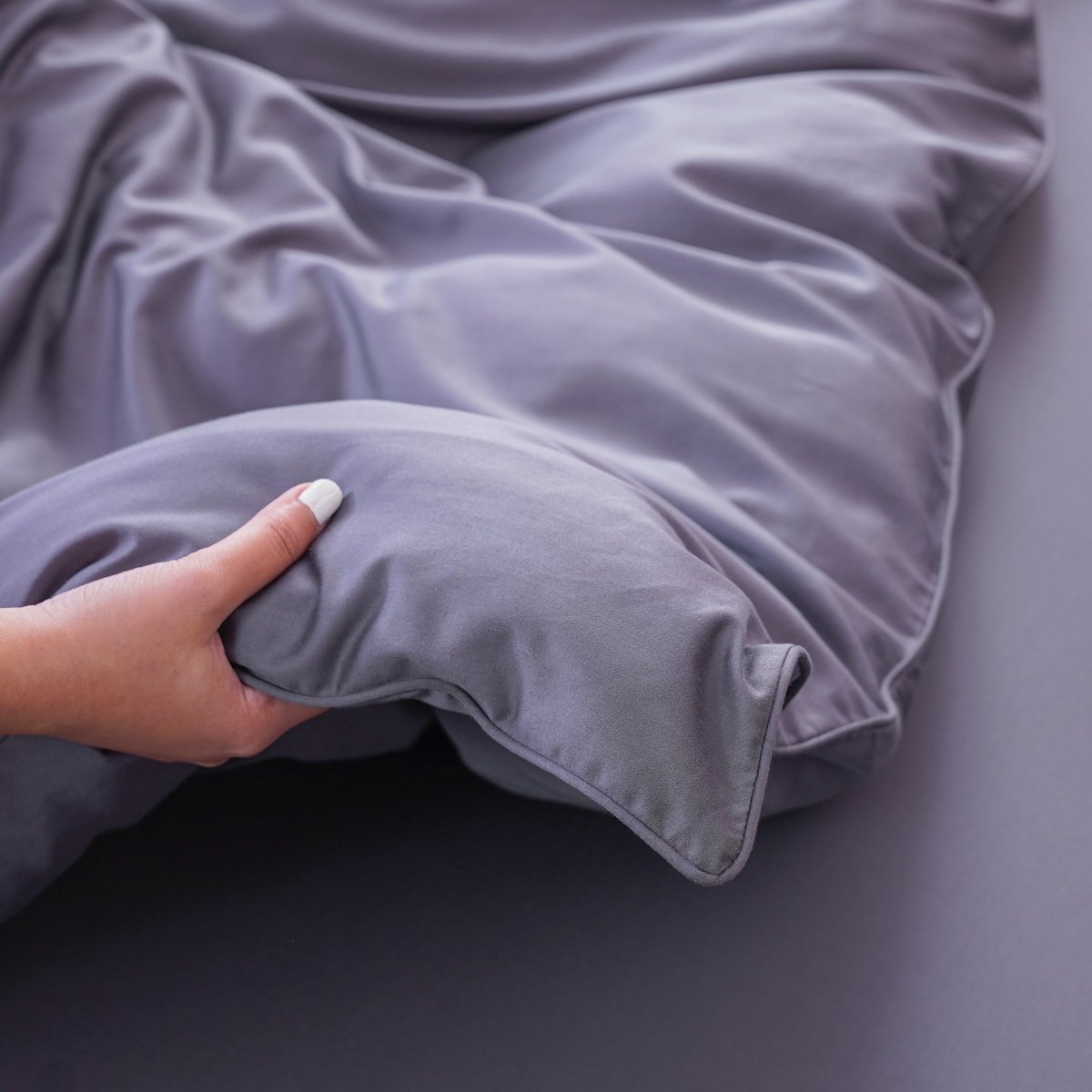
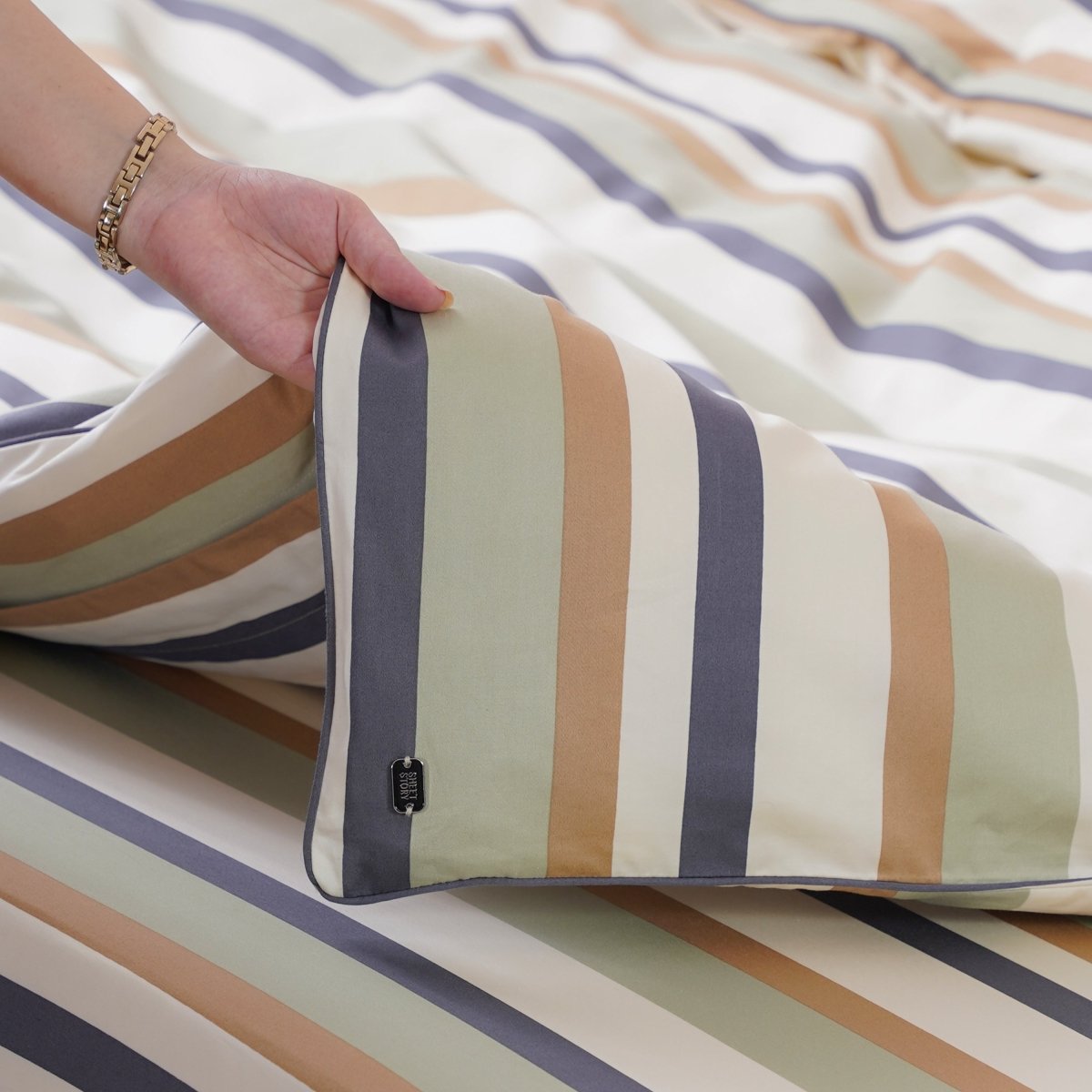


Struggling with sheets that pop off in the night? This guide to deep and extra-deep fitted sheets will help you measure once, buy right, and stop fighting your bed.
There is a particular kind of 3am frustration that only happens with the wrong fitted sheet. A corner lets go, the elastic snaps back across the mattress, and you are awake — flattening fabric in the dark. It is almost never the sheet's fault. It is a depth mismatch.
Every fitted sheet has a pocket depth — the height of the elasticated side wall that wraps down over your mattress. Standard sheets are built for pockets of roughly 20 to 25cm, which suited the mattresses sold twenty years ago.
Mattresses have grown since. Pillow tops, memory foam layers, hybrid pocket springs and toppers have pushed the average height well past what a standard sheet was designed to hold. That is why deep fitted sheets (26–35cm) and extra-deep fitted sheets (36–45cm) exist — not as a premium upsell, but as a correction.
A sheet does not pop off because the elastic is weak. It pops off because the pocket ran out of fabric before the mattress ran out of height.
This takes two minutes and saves you a return. Do it properly once and you will never guess again.
Remove all bedding down to the bare mattress. Measuring over an existing sheet adds a false centimetre or two — exactly the margin that decides whether a corner holds.
Stand a tape measure vertically against the middle of one long side. Run it from the base of the mattress to the highest point of the top surface. Corners compress and will read short.
If you sleep on a topper, it lives inside the sheet — so it counts. Measure mattress and topper together as one height. A 7cm topper alone can push you into the next depth band.
The pocket needs surplus to grip underneath. Take your measured height, add a few centimetres, then buy the band that comfortably covers that total. Slightly over is fine. Under is not.
Depth is the first thing to get right, but not the only thing. Three details separate a sheet that holds from one that surrenders by morning.
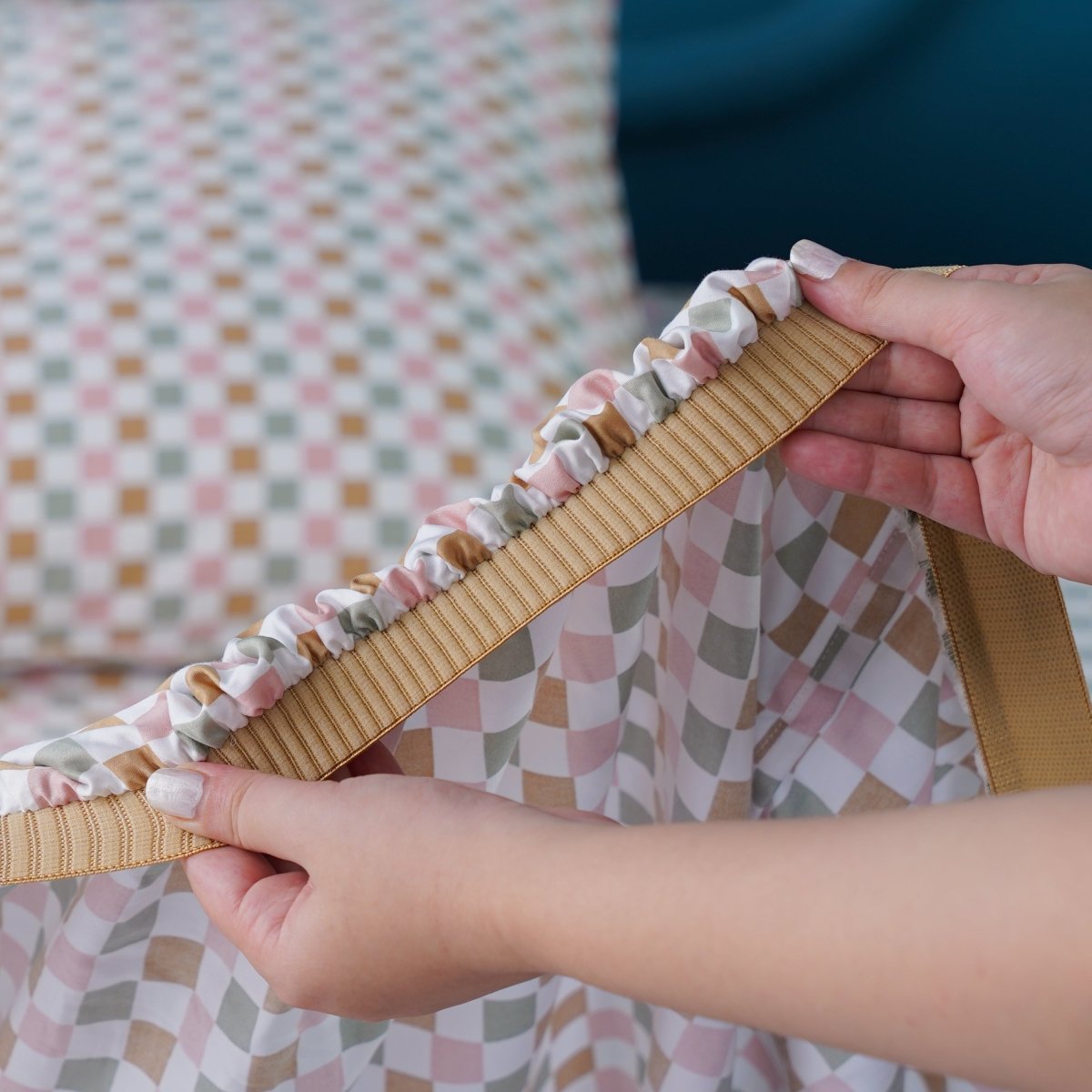
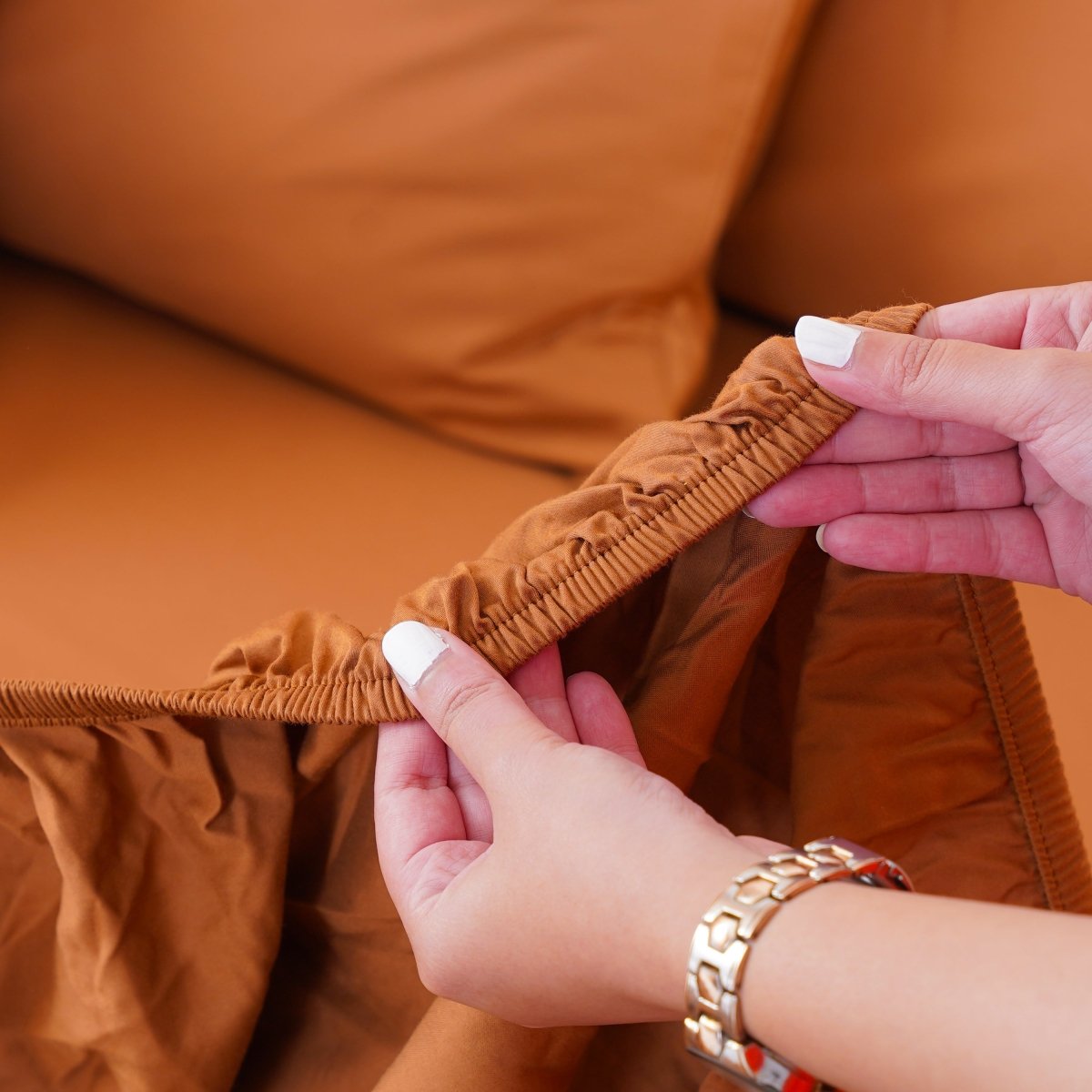
Cheaper sheets place elastic only at the four corners. A full elasticated hem runs the entire perimeter, spreading tension so no single corner carries the load.
Good elastic returns to its original length after every stretch and wash. Poor elastic slackens within months — the sheet still fits the depth, but no longer grips it.
Bamboo viscose has natural stretch and recovery that stiffer cottons lack. It moves with you overnight, then settles back rather than dragging the corners inward.
The most frequent error is buying by bed size alone. A king fitted sheet tells you length and width — it says nothing about how far down the sides it reaches. Two king sheets can differ by 20cm of pocket depth.
The second is forgetting the topper, which quietly adds five to ten centimetres. The third is assuming deeper is always safer: go far too deep on a slim mattress and you get loose, rucked fabric underfoot. Match the band to your measurement rather than reaching for the largest available.
Every Sheet Story fitted sheet lists its exact pocket depth in centimetres alongside the elastic-hem specification — so you can match it against your own measurement before you buy. Our bamboo-blend sheets use a fully elasticated all-round hem with tested recovery, built to hold a thick mattress night after night, wash after wash.
Deep fitted sheets are not a luxury upgrade. They are the correct answer to a mattress that has simply grown taller than the sheets most shops still sell.
Measure your mattress with the topper on, add a few centimetres for tuck, and buy the depth band that covers it. Then check the sheet has a fully elasticated hem rather than four corner tabs. Get those two things right and the 3am corner-chase stops for good.
Every Sheet Story fitted sheet lists its exact pocket depth and elastic-hem spec — so you can match your measurement and buy with confidence.
Shop fitted sheets