Sleep guide · Women's health
If you have woken at 3am too hot, kicked off the duvet, and then woken again cold and damp, you are far from alone. Night sweats are one of the most common reasons women in perimenopause and menopause lose sleep.
The NHS describes hot flushes as sudden feelings of heat in the face, neck and chest, which can bring sweating, palpitations or dizziness. When they happen at night, they are called night sweats. Each one tends to last a few minutes, and symptoms commonly continue for several years.
No sheet can stop a hot flush. What your bed can do is help your body cool down quickly afterwards, stay comfortable rather than clammy, and let you fall back asleep sooner. That is what this guide is about.
This guide is about comfort and sleep, not medical treatment. If night sweats are affecting your daily life, speak to your GP or a pharmacist. Treatments such as HRT, and other options, can help. The NHS also has a helpful page on things you can do for menopause symptoms.
In short
- Choose breathable natural-fibre bedding that does not trap heat.
- Layer your bed so you can remove warmth in seconds, without fully waking.
- Keep the bedroom cool and have a fan within reach.
- Keep a spare pillowcase and sheet by the bed for nights that need a quick change.
What the NHS suggests
Alongside medical treatment, the NHS recommends a few everyday changes for hot flushes and night sweats:
- wearing lighter clothing and keeping the bedroom cool at night
- using a fan, a cool shower or a cold drink when a flush comes on
- noticing and cutting back on possible triggers such as spicy food, caffeine, hot drinks, smoking and alcohol
- regular exercise, managing stress, and cognitive behavioural therapy (CBT)
Your bedding is where those first two points really come to life.
Choosing bedding for night sweats
Look for breathability first
Breathable fabrics let heat and moisture move away from your skin rather than sitting against it. Natural fibres such as cotton and bamboo-derived fabrics are generally a better choice than fully synthetic bedding, which can trap warmth.
Our Ackly Bamboo collection is a blend of 65% bamboo and 35% long-staple cotton in a 400-thread-count sateen weave. Many people who sleep hot find it feels noticeably cooler and silkier against the skin than standard cotton. If you prefer pure cotton, our Ella Cotton range is 100% long-staple cotton sateen.
Want to understand weaves in more depth? Read percale vs sateen for hot sleepers.
Avoid bedding that is too heavy
Brushed cotton is lovely in a cold room, but if you run hot at night it may be too warm next to your skin. Save it for the coldest weeks, or for your partner's side.
Layer for quick changes
A single thick duvet is all or nothing. During a night sweat you throw it off, then wake up cold twenty minutes later. A layered bed lets you adjust without fully waking.
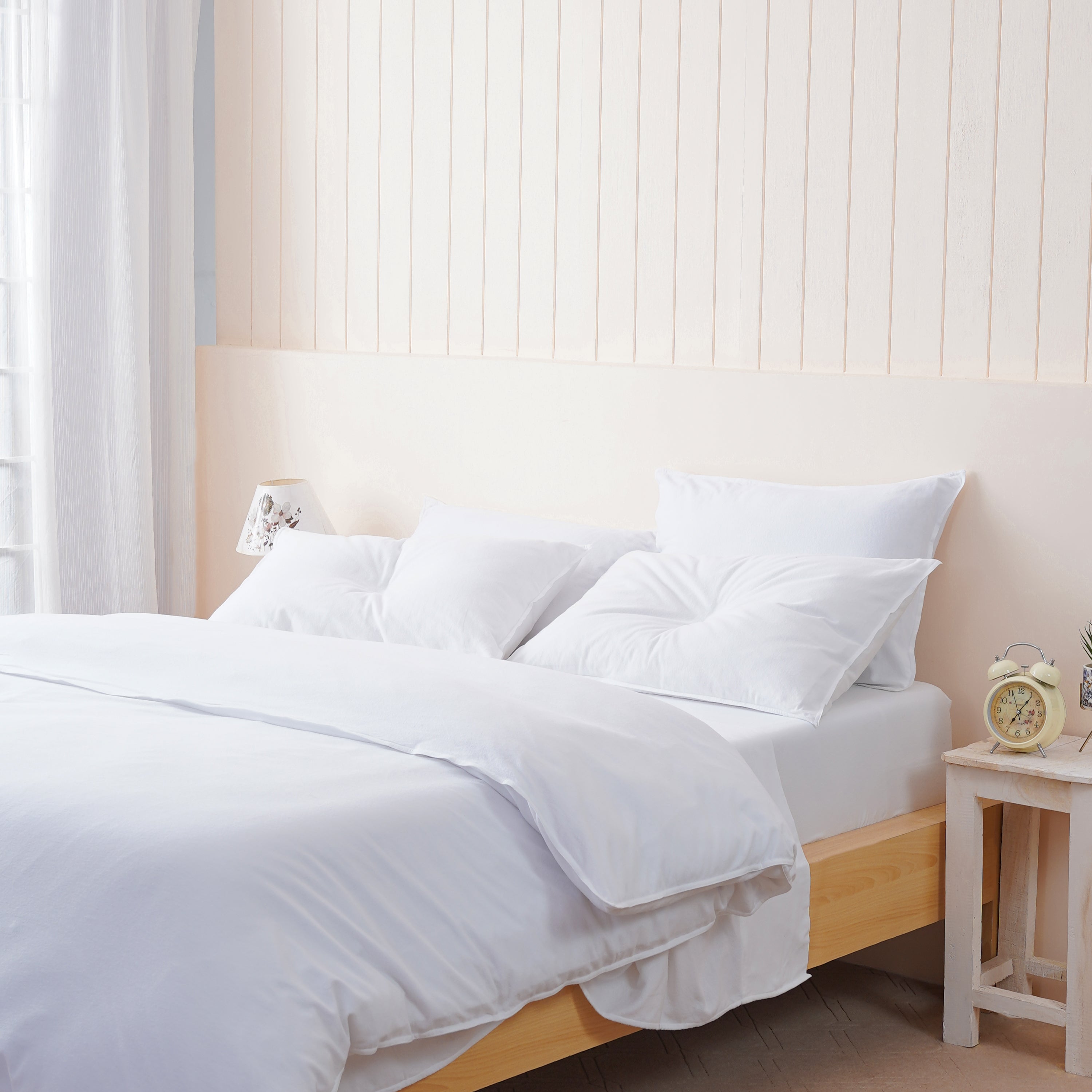
A breathable fitted sheet
Your base layer. Choose a natural, breathable fabric with a deep pocket so it stays smooth.
A flat sheet
On many nights a flat sheet and a light blanket are enough. It is the easiest layer to keep on when the duvet comes off.
A lighter-tog duvet
Choose a lower tog than you would normally use, and add a throw on cold nights instead of going heavier.
Two duvets for two people
If you share a bed, separate single duvets let each of you choose your own warmth. It is common across Scandinavia, and it can transform a couple's sleep.
Not a cure. A calmer bed, night by night.
Set up your bedroom for cooler nights
- Keep a fan by the bed so you can switch it on without getting up.
- Keep a glass of cold water on your bedside table.
- Lower the thermostat in the bedroom, or turn the radiator off overnight.
- Wear light, breathable nightwear, or layers you can take off easily.
- Keep a spare pillowcase, or a whole spare set, folded by the bed. A fresh pillowcase after a night sweat can make the difference between drifting back off and lying awake.
Protect your mattress, too. A bamboo terry waterproof mattress protector has a soft, breathable surface with a waterproof layer underneath, so your mattress stays fresh and you only need to wash the protector.

Caring for bedding through night sweats
You may find yourself washing bedding more often. Wash sheets and pillowcases at least once a week, use a gentle detergent, and skip fabric conditioner on bamboo, which can coat the fibres and make them feel less breathable. Two complete sets that you rotate will last longer and make busy weeks easier.
Sheet Story
A cooler bed, made for calmer nights
Ackly Bamboo is a 65% bamboo and 35% long-staple cotton sateen, OEKO-TEX certified and soft against the skin. Choose a full set, or start with the fitted sheet and pillowcases.
Shop Ackly Bamboo →Questions we are often asked
What is the best bedding for menopause night sweats?
Breathable natural-fibre bedding, such as cotton or bamboo blends, in a layered set-up that lets you remove warmth quickly. Avoid heavy synthetic bedding that can trap heat.
Are bamboo sheets good for night sweats?
Many people who sleep hot find bamboo blends feel cooler and smoother against the skin than standard cotton. They will not stop a hot flush, but they can make it easier to get comfortable again afterwards.
Should I use a lower-tog duvet during menopause?
Often, yes. A lighter duvet with a flat sheet and a throw lets you adjust through the night far more easily than one heavy duvet.
When should I see a doctor about night sweats?
If night sweats are affecting your sleep or daily life, speak to your GP or a pharmacist. The NHS also advises seeing a GP if night sweats regularly wake you or worry you, come with a high temperature, cough or diarrhoea, or happen alongside weight loss you cannot explain.
Every bed tells a Sheet Story