


Winter care guide
Dry bedding, fresh home
How to get sheets and duvet covers properly dry through a British winter, without filling your home with condensation.
Washing day in winter is a small puzzle every UK household knows. The line is no use, the radiators are tempting, and a wet king-size duvet cover seems to take days. Here is how we dry bedding well, from October to March.
Bedding is one of the hardest things to dry indoors. A double or king-size set is a lot of fabric, it folds over itself on an airer, and it holds water in the seams and corners long after the surface feels dry. Get it wrong and you end up with sheets that smell musty, or a damp bedroom wall by February.
12 litres
of moisture an average UK household adds to the air each day, from cooking, washing and breathing.
20+ litres
a day once laundry is dried indoors as well, according to South Kesteven District Council.
That extra water has to go somewhere. In a cold, closed-up house it settles on windows and outside walls as condensation, and over time that can become mould. The government's guidance on damp and mould names drying laundry indoors, alongside cooking and showering, as an everyday source of moisture, and says damp homes are a particular risk for children, older people and anyone with asthma or a weakened immune system.
In short
- Use a tumble dryer or the line whenever you can; they keep moisture out of your rooms.
- If you dry indoors, choose one warm, ventilated room and keep its door closed.
- Never drape bedding over radiators.
- Make sure bedding is completely dry, seams and corners included, before it goes on the bed or in the cupboard.
Every drying method, honestly rated
Outside on a dry, breezy day
Even in winter, a few hours of wind does most of the work. Bring it in to finish off rather than leaving it out overnight.
Tumble dryer
Vented outside, or a condenser or heat pump dryer. Check the care label first and dry on a low to medium heat.
Heated airer in a closed room
Faster than a standard airer and gentle on fabric. Open the window a crack so the moisture can escape.
Airer in a ventilated room
A bathroom with the extractor fan on and the door shut works well. Avoid bedrooms and living rooms.
Over radiators
It blocks heat from the room, pushes moisture straight into the air, and can leave stiff, uneven patches on fine fabrics.
Folded on a chair or door
Bedding folded over on itself never dries in the middle, and that is where the musty smell starts.
Dry first. Then make the bed.
How to dry bedding indoors, step by step
Give it an extra spin
Run an extra spin cycle at the end of the wash. The less water that leaves the machine, the less ends up in your air.
Shake everything out
Give sheets and duvet covers a firm shake before hanging. It loosens creases and opens the fibres so air can move through them.
Turn duvet covers inside out
The corners and seams hold the most water. Inside out, they dry at the same pace as the rest.
Spread it, don't fold it
Hang large pieces over two or three rails rather than one, and leave gaps between them. Turn them halfway through.
Choose one room and close the door
A warm room with a window open a crack, or a bathroom with the extractor fan running. Keeping the door shut stops the moisture spreading through the house.
Check the hidden places
Before you put it away, feel the seams, the hem, the corners of the duvet cover and the elastic of the fitted sheet. If anything feels cool, give it longer.

How to tell bedding is really dry
Damp fabric often feels cool rather than wet, which is why it fools us. Run this quick check before the bedding goes back on the bed or into the airing cupboard:
- It feels room temperature everywhere, not cool, including the seams.
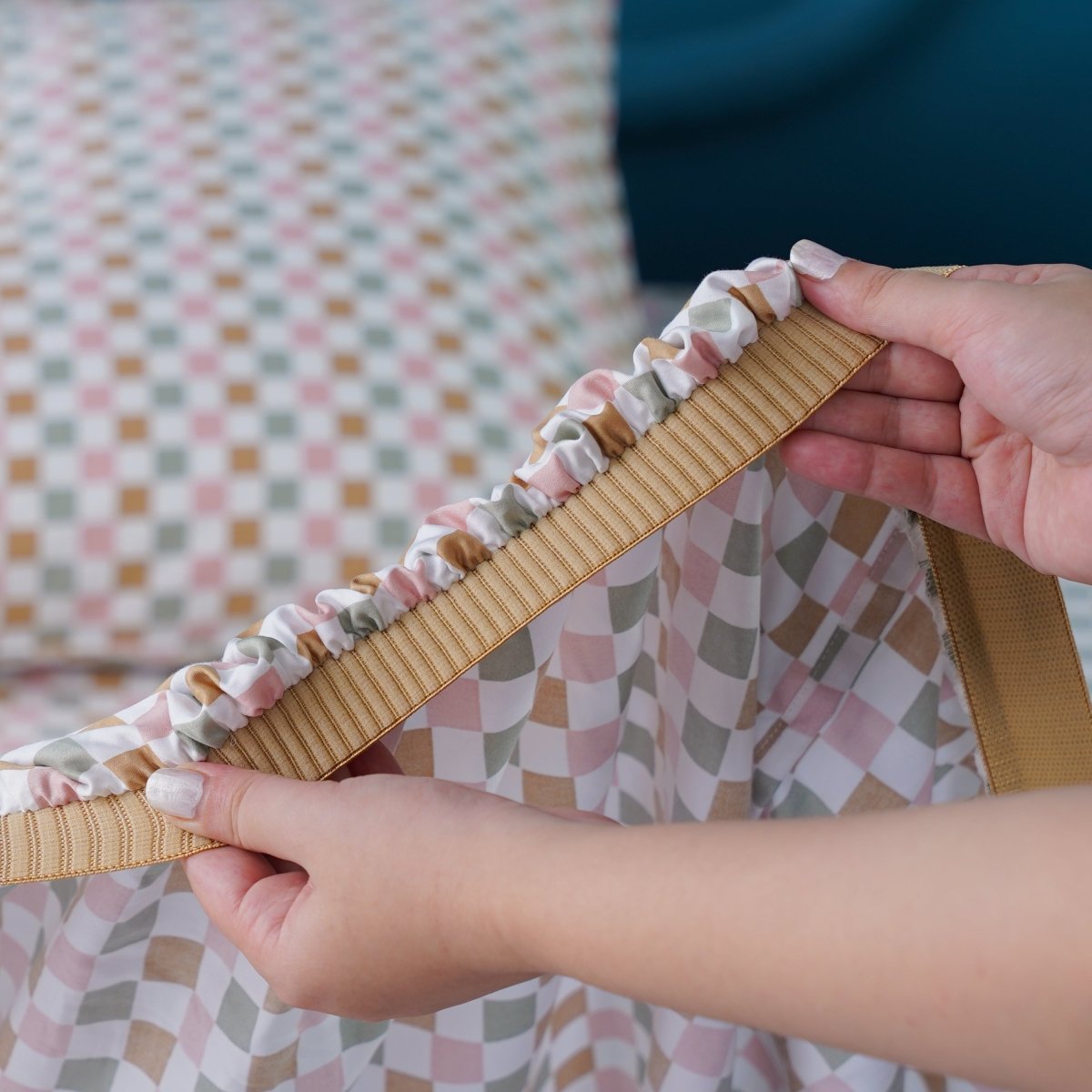
- The elastic on your fitted sheet feels dry and springs back.
- There is no faint musty smell when you hold it to your face.
- The inside corners of the duvet cover feel the same as the outside.
Keep two sets of bedding per bed in winter. While one set dries slowly and properly, the other is on the bed, so you are never tempted to make it up with sheets that are not quite dry.
Does fabric make a difference?
Yes. Lighter, smoother weaves let go of water faster than thick, napped ones.
| Fabric | Drying indoors | Tip |
|---|---|---|
| Ackly Bamboo (bamboo and cotton sateen) | Smooth and fairly quick | Shake well and hang flat to keep the sheen; check the care label before tumble drying |
| Ella Cotton (cotton sateen) | Steady | Turn halfway through; iron while very slightly damp for a crisp finish, then air fully |
| Bella Brushed Cotton | Slowest | Its soft brushed surface holds more water, so give it extra time or finish it in the dryer |
For more on keeping bedding fresh, read our guides to how often to wash a duvet cover and how to fold and store bed sheets.
Sheet Story
Two sets make winter easier
Keep one set on the bed and one in the wash. Our Ackly Bamboo, Ella Cotton and Bella Brushed Cotton ranges are all OEKO-TEX certified, with deep-pocket fitted sheets. Free UK delivery on orders over £80.
Shop all bedding →Questions we are often asked
Is it bad to dry bedding indoors?
Not if you do it carefully. Drying laundry indoors adds a lot of moisture to the air, so use one warm, ventilated room with the door closed, and avoid radiators. A tumble dryer or the washing line is better whenever you can use one.
Why does my bedding smell musty after drying?
Usually because part of it stayed damp for too long, often the seams, corners or a fold. Rewash it, spread it out over several rails, and make sure it dries fully within a day.
Can I put a duvet cover on the radiator to dry?
We would avoid it. It pushes moisture into the room, blocks heat from your radiator and can leave stiff, uneven patches on fine fabrics.
How long does bedding take to dry indoors in winter?
It varies with the room and the fabric. Sateen sheets in a warm, ventilated room may dry within a day; brushed cotton can take longer. Always check the seams before putting it away.
Every bed tells a Sheet Story